Mixing tools
Mixing paddles for drills and paddle mixers for plaster, tile adhesive, mortar, concrete, paint and resin. Toolty paddles in galvanised or powder-coated steel, with M14, SDS Plus or hex (round) shanks, head diameters from 60 to 200 mm and lengths up to 750 mm.
Choose by material:
plaster ·
mortar & adhesive ·
concrete & cement ·
paint & resin ·
paint stirrers
Choose by shank:
M14 thread ·
SDS Plus ·
hex / round shank
Mixing paddle guide: shanks, paddle types, drill power & FAQ
Which shank fits my drill or mixer?
- Hex or round shank: fits the chuck of a standard drill. The easiest choice for paint, filler and small batches of plaster.
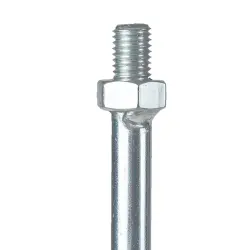
- M14 thread: screws straight into dedicated paddle mixers. The professional choice for heavy, regular mixing.
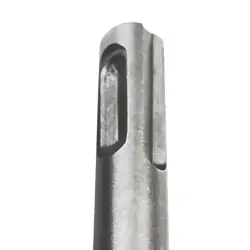
- SDS Plus: clicks into an SDS drill. Always use rotation-only mode, never hammer mode.
- Adapters: use an M14 paddle in a drill with an M14 to hex adapter or an M14 to SDS adapter. For deep buckets, add an M14 extension.
Positive or negative paddle?
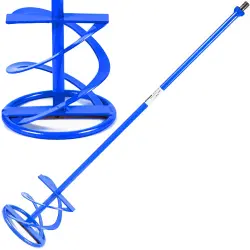
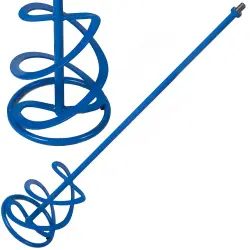
- Positive (bottom-up) spiral: lifts heavy material from the bottom of the bucket. Best for concrete, mortar, screed and tile adhesive.
- Negative (top-down) spiral: pushes material down, so it splashes less and traps fewer air bubbles. Best for paint, resin, gypsum and finishing plaster.
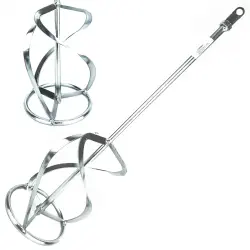
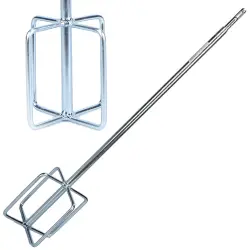
- Whisk or basket style: for plaster and joint compound, giving a smooth, lump-free mix.
What size paddle and drill do I need?
- Head diameter: small heads (60–100 mm) for paint, resin and small tubs. 120–140 mm for plaster and adhesive in a standard bucket. 160–200 mm for large batches of mortar and concrete.
- Length: 600 mm suits most buckets. 750 mm keeps the drill higher above deep tubs and reduces splashing on your hands.
- Drill power: a cordless drill is fine for paint and small batches. For mortar, screed or concrete, use a corded drill of around 1000 W or a dedicated mixer.
How to use a mixing paddle
- Fit the paddle securely and lower it into the material before you start.
- Start slowly, then increase speed. Plaster and paint mix best at low speed.
- Move the paddle up and down in a figure-of-eight to reach the edges and bottom.
- Stop the drill before lifting the paddle out, then rinse it straight away in clean water so the material cannot set on the blades.
Want more detail? Read our guide: how to choose the right paddle for concrete, plaster and mortar.
Mixing paddle FAQ
Can I use a normal drill with a mixing paddle?
Yes. Hex and round-shank paddles fit a standard drill chuck. Heavy mortar and concrete need a powerful corded drill or a paddle mixer.
Can I use an SDS drill for mixing?
Yes, with an SDS Plus paddle and the drill set to rotation only. Never use hammer mode for mixing.
What is an M14 mixing paddle?
A paddle with an M14 threaded end that screws into dedicated paddle mixers. With an adapter it also fits a drill.
Galvanised or powder-coated?
Both protect the steel from corrosion. Galvanised paddles are hard-wearing for site work, and powder-coated paddles have a smooth finish that is easy to clean.
How do I clean a mixing paddle?
Spin it in a bucket of clean water immediately after use. Never pour cement or plaster waste down the drain.
Showing 1–24 of 36 resultsSorted by popularity
-

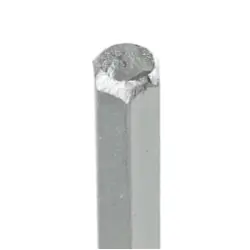
Gypsum Mixing Paddle 130x600x10mm HEX Thread Galvanized Toolty
-
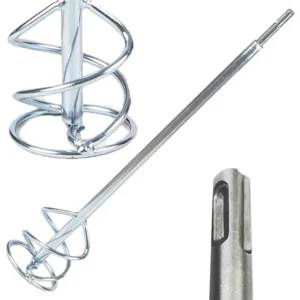
Propeller Mixing Paddle 85×450/650mm SDS Steel Positive 2Blade For Leveling Mass
From £7.39 Inc. VAT Select options This product has multiple variants. The options may be chosen on the product page -
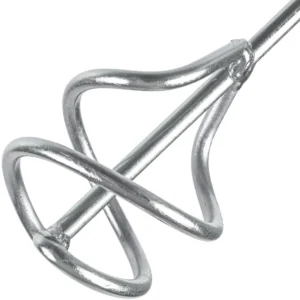
Mixing Paddle Steel Rounded Shank For Adhesive Plaster Mortar Toolty
From £1.81 Inc. VAT Select options This product has multiple variants. The options may be chosen on the product page -

Gypsum Mixing Paddle 130x600x10mm M14 Thread Galvanized Toolty
-
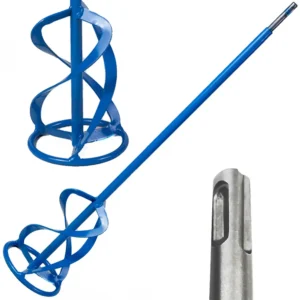
Professional Mixing Paddle 120×600/750mm SDS Plus For Concrete Plaster
From £12.00 Inc. VAT Select options This product has multiple variants. The options may be chosen on the product page -
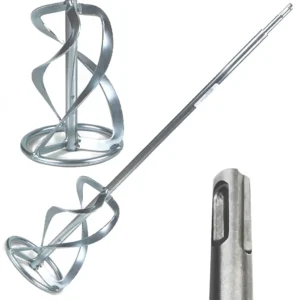
Pro Mixing Paddle Mixer Whisk 120×600/750mm SDS Plus Galvanized Toolty
From £12.35 Inc. VAT Select options This product has multiple variants. The options may be chosen on the product page -
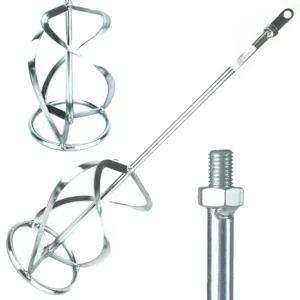
Pro Mixing Paddle Multi Size M14 Thread Negative Steel For Concrete Plaster Toolty
From £12.89 Inc. VAT Select options This product has multiple variants. The options may be chosen on the product page -

Gypsum Mixing Paddle 130x600x10mm SDS Galvanized Toolty
-
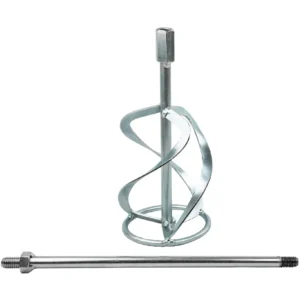
Professional Mixing Paddle M14 Thread Steel Positive 3Blade Various Sizes Toolty
From £12.11 Inc. VAT Select options This product has multiple variants. The options may be chosen on the product page -
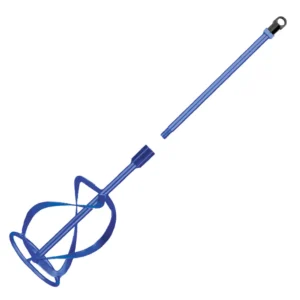
Assembled Professional Mixing Paddle Mixer Stirrer M14 Steel Positive 3Blade Toolty
From £10.63 Inc. VAT Select options This product has multiple variants. The options may be chosen on the product page -

Mixing Paddle M14 Thread Extension 10-20cm Galvanized Steel Stirrer Mixer Agitator Toolty
From £8.39 Inc. VAT Select options This product has multiple variants. The options may be chosen on the product page -

Mixing Paddle Adapter Attachment M14 To HEX Fixing 130mm Toolty
-
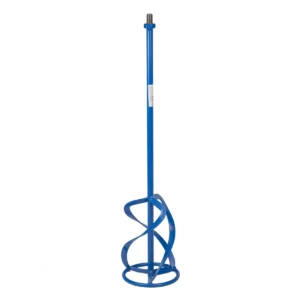
Pro Mixing Paddle Multi-Size M14 Stirrer Steel For Concrete Plaster Toolty
From £11.39 Inc. VAT Select options This product has multiple variants. The options may be chosen on the product page -
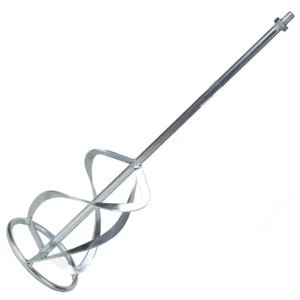
Pro Galvanized Steel Mixing Paddle Stirrer Mixer Whisk Agitator M14 Toolty
From £11.39 Inc. VAT Select options This product has multiple variants. The options may be chosen on the product page -
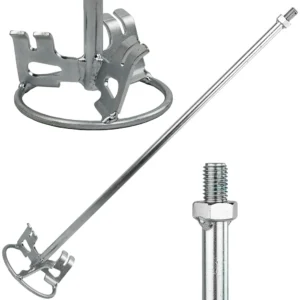
Rendeer Mixing Paddle For Drill M14 Thread Steel For Plaster Glue Paint Gypsum Toolty
From £20.39 Inc. VAT Select options This product has multiple variants. The options may be chosen on the product page -

Paint Mixing Paddle HEX Stirrer Mixer Agitator Galvanized Steel 60-120mm Toolty
From £1.91 Inc. VAT Select options This product has multiple variants. The options may be chosen on the product page -
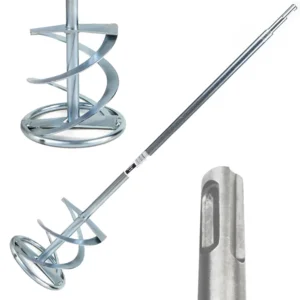
Italian Mixing Paddle Mixer Whisk SDS Galvanized Steel Positive Toolty
From £10.39 Inc. VAT Select options This product has multiple variants. The options may be chosen on the product page -

Mixing Paddle Adapter Attachment M14 To SDS Fixing Galvanized 130mm Toolty
-
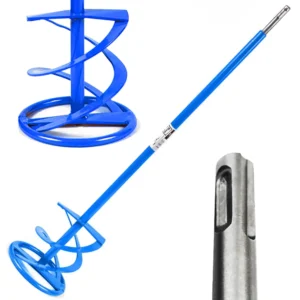
Italian Mixing Paddle 120×600/750 mm SDS Powder Coated Toolty
From £9.99 Inc. VAT Select options This product has multiple variants. The options may be chosen on the product page -
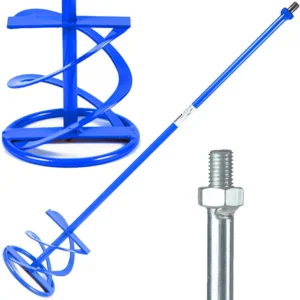
Italian Mixing Paddle Whisk M14 Thread Powder Coated ForAdhesive Mortar Plaster Toolty
From £10.99 Inc. VAT Select options This product has multiple variants. The options may be chosen on the product page -
-26%
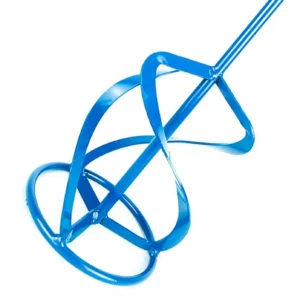
Toolty Professional Mixing Paddle M14 , NEGATIVE, Painted 750mm
From £10.99 Inc. VAT Select options This product has multiple variants. The options may be chosen on the product page -

Resin Mixing Paddle Stirer Whisk Mixer 90mm Powder/Galvanized Toolty
From £3.97 Inc. VAT Select options This product has multiple variants. The options may be chosen on the product page -
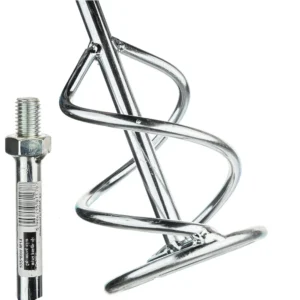
Propeller Mixing Paddle 105x600mm M14 Thread Galvanized/Coated Steel 2Blade Toolty
From £9.14 Inc. VAT Select options This product has multiple variants. The options may be chosen on the product page -
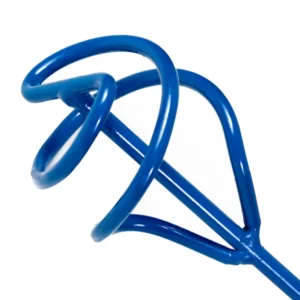
Mixing Paddle Powder Coated Rounded Shank Multi-Size Toolty
From £1.84 Inc. VAT Select options This product has multiple variants. The options may be chosen on the product page